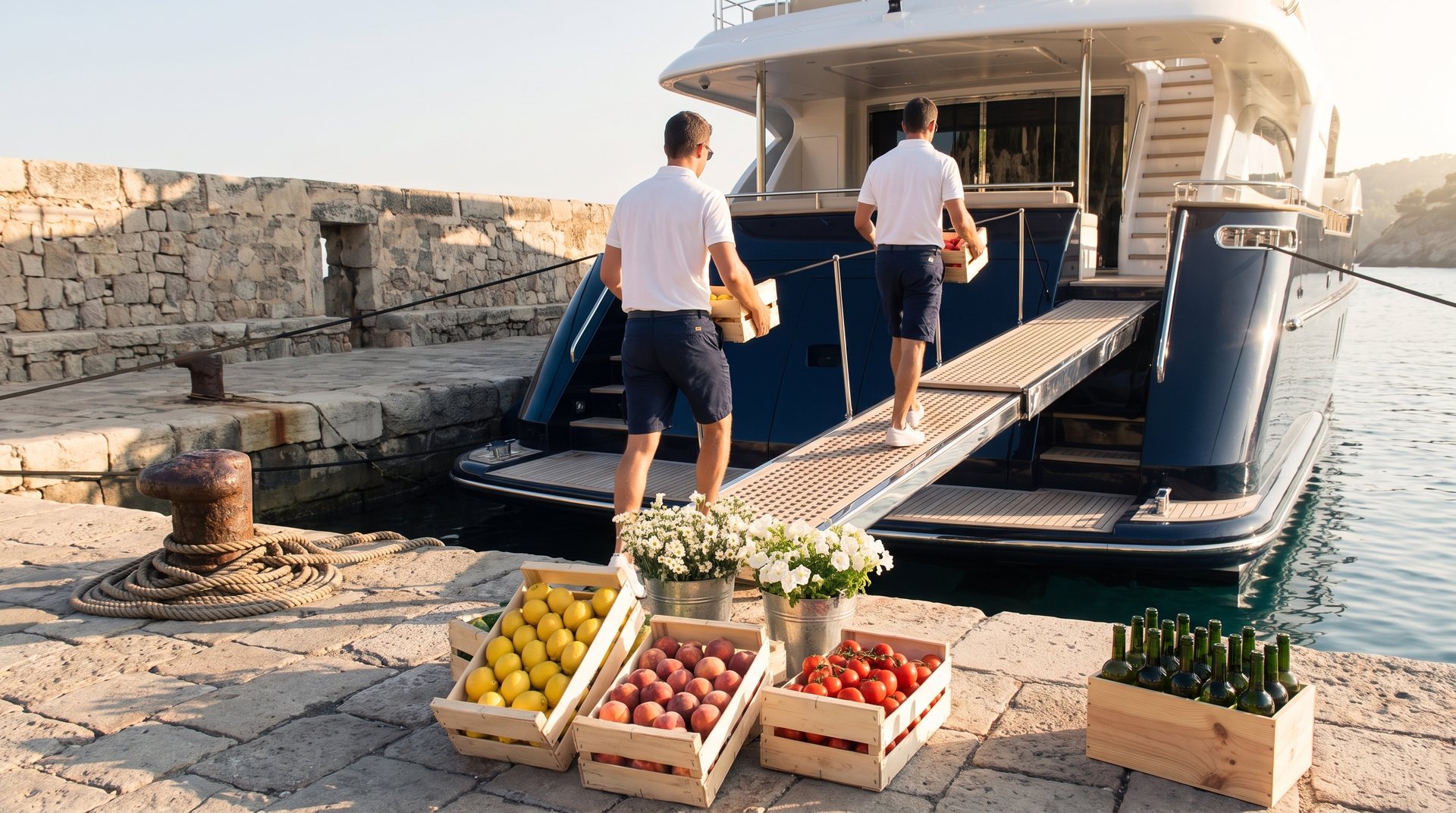
What a charter costs, without the jargon.
The weekly rate you see advertised is only part of the figure. Here is everything else, what it pays for and roughly how large it is, so the total never surprises you.
The short version
Two parts: the yacht, and the running of it
Most crewed yachts in the Mediterranean are chartered on terms where the charter fee pays for the yacht and her crew, and everything consumed during your week is paid for separately, at cost. That second part is handled through an advance called the APA.
As a rule of thumb, allow the charter fee, plus roughly a quarter to two fifths of it again for running costs, plus local tax, plus a gratuity for the crew. We set all of this out for each yacht on your shortlist, so you compare totals and not headlines.
Line by line
What makes up the total
| Cost | What it covers | Typical size |
|---|---|---|
| Charter fee | The yacht, her crew, insurance and the yacht's own equipment for the period. Rates are usually weekly and higher in July and August and over Christmas and New Year. | Quoted per yacht, per week |
| APA (advance provisioning allowance) | Fuel for the yacht and tenders, food and drink, berthing and harbour fees, communications and any special requests. Paid before the charter and spent on your behalf by the captain. | Usually 25 to 40 per cent of the charter fee |
| VAT or local tax | Charged on the charter fee according to where the charter starts and cruises. The rate and the rules differ between France, Italy, Spain, Greece, Croatia and elsewhere, and they change. | Varies by country; we confirm the current rate for your itinerary |
| Delivery or redelivery | Payable only when you ask to start or finish somewhere other than the yacht's usual base, to cover fuel and crew time for the empty passage. | Only if applicable |
| Crew gratuity | Discretionary, given to the captain at the end to share among the crew. | Commonly 5 to 15 per cent of the charter fee |
| Travel to the yacht | Flights and cars are separate from the charter. We arrange them on the same itinerary. | Quoted with your proposal |
Figures are typical ranges across the industry, not quotations. Your proposal states the actual figures for each yacht.
APA explained
An advance, not a fee
The APA is your money, held by the captain and spent on your instructions. Before the charter you complete a preference sheet covering food, wine, activities and anything particular you would like on board, and the crew provision against it.
The captain keeps an account with receipts, which you can ask to see at any point during the week. If spending runs ahead of the advance, for example because you chose to cruise further or to entertain more, the captain will ask for a top-up. Whatever is left at the end is returned to you.
Fuel is usually the largest and least predictable part. A fast motor yacht covering long distances each day uses far more than the same yacht spending the week moving gently between anchorages. If you have a budget in mind, tell us, and we will suggest an itinerary and a yacht that respect it. Read more in what APA covers.
The contract
MYBA terms, in plain words
Most Mediterranean charters use the standard agreement published by MYBA, the Worldwide Yachting Association. It protects both sides and is widely understood.
- The agreement names the yacht, the dates, the cruising area, the number of guests and the fee
- Payment is normally in two stages: a deposit on signing and the balance, with the APA, before the charter
- Funds are held by the stakeholder named in the agreement until the charter takes place
- It sets out what happens if the yacht is unavailable, if you need to cancel, or if weather stops the cruise
- The number of guests who may sleep on board is fixed by the yacht's licence, most often twelve
- Other regions use different standard terms, some of which include more in the fee. We explain the difference where it applies
A sensible way to budget
Start from the total you are comfortable with
Tell us the all-in figure you have in mind, including running costs, tax and gratuity. We work backwards to the yachts and itineraries that fit, which is kinder than falling for a yacht and discovering the extras afterwards.
Request a proposal
Tell us about the trip
Tell us where, when and how many of you, and a rough budget if you have one. We reply with yachts that fit and the full cost of each. Nothing is booked or charged online.
Prefer to talk? +44 2030 048300 or WhatsApp, at any hour.
Questions people ask
About charter costs
Is the APA a way of adding to the price?
No. It is spent at cost on things you consume, with receipts, and any balance is returned. It exists because no two charters use the same amount of fuel, food or berthing.
Are day charters priced the same way?
Usually not. A day charter is often quoted as one figure that includes fuel for the planned route, with food and drink agreed in advance.
Why does the same yacht cost more in August?
Demand. Mediterranean high season is July and August, and rates reflect it. June and September offer warm water, quieter anchorages and lower rates.
Do we have to tip?
Gratuity is discretionary. If the crew have looked after you well, 5 to 15 per cent of the charter fee is customary, given to the captain to share.
Can you hold a yacht while we decide?
A yacht is secured only by a signed agreement and deposit. In peak weeks the best yachts go early, so tell us your dates as soon as you know them.