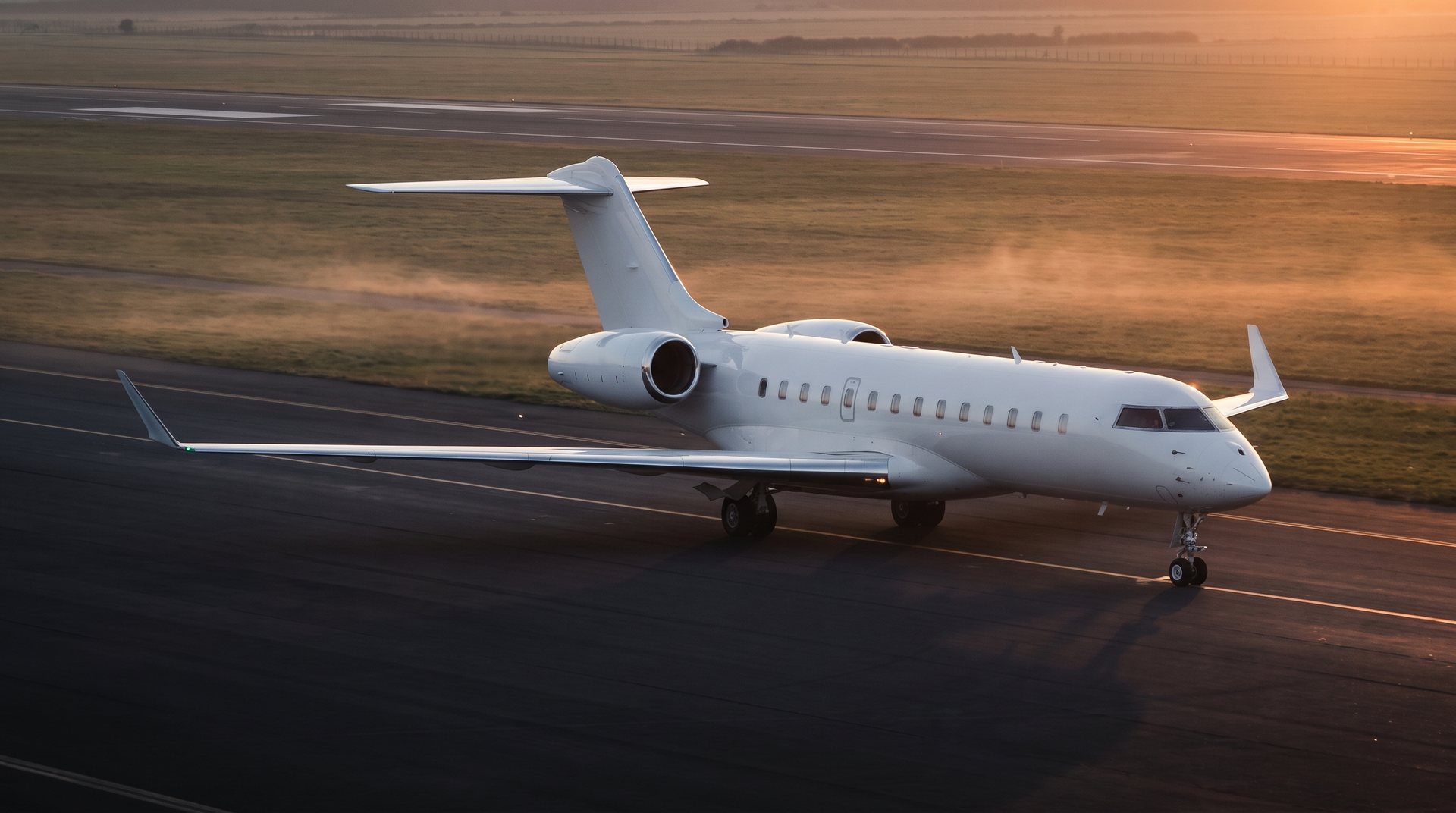
The top of the ladder. Twelve to sixteen people, twelve to fifteen hours in the air, a cabin divided into rooms with proper beds, and the range to reach Hong Kong, Singapore or Los Angeles without stopping.
PassengersTypically 12 to 16Some are certified for as many as nineteen, but a long sector is far better with a dozen or so and room to spread out.
RangeRoughly 6,000 to 7,700 nautical milesAbout twelve to fifteen hours in the air, which is most of the world from London in a single flight.
CabinThree or four separate zonesA club, a conference or dining area and a private rear cabin that makes up as a bedroom. A shower on the largest aircraft.
CrewTwo cabin crew on the longest sectorsLong flights also need a relief flight crew and somewhere for them to rest, which is built into the aircraft.
Category guidance. Figures are typical for the class rather than promises about a particular aircraft, and every quote names the actual aeroplane.
What it is for
A flight long enough to need a bedroom
At thirteen or fourteen hours, the question is no longer how comfortable the seat is but whether you arrive able to work. These aircraft are designed around that: a genuine bed rather than a flat seat, and enough separation that one group can hold a meeting while another sleeps.
They are chartered for the trips where the alternative is a first-class cabin and a connection: London to Hong Kong for two days, a delegation to Singapore, a family to the west coast of the United States. Aircraft are arranged with licensed commercial operators.
Examples
Aircraft you are likely to be offered
Aircraft
Typical seats
Typical range
Character
Gulfstream G650ER
13 to 16
About 7,500 nm
Fast and very long-legged. London to almost anywhere in Asia non-stop
Bombardier Global 7500
13 to 17
About 7,700 nm
The longest published range of the class, with four separate living zones
Gulfstream G550
14 to 16
About 6,750 nm
An older design, widely available, and still enough for most long trips
Bombardier Global 6000
12 to 13
About 6,000 nm
The established long-range workhorse, with a wide and quiet cabin
Dassault Falcon 8X
12 to 14
About 6,450 nm
Three engines, a notably quiet cabin, and better than the others at restricted airports
Published range figures assume still air and a light load. A full cabin, a strong headwind or a hot and high departure airport all reduce them, sometimes by several hundred miles.
Range on the map
Where the class reaches
Drawn from Farnborough as true circles on the globe. The solid ring is the top of the class's typical range and the dashed ring is what most of its aircraft can plan on. Change the departure to see the reach from anywhere.
Published range85%, still-air planning
Ultra-long-range jets from Farnborough Airport (FAB). The solid ring is the top of the class's published range, 7,700 nautical miles; the dashed ring is 85% of the bottom of it, 5,100 nautical miles, which most aircraft in the class can plan on non-stop. Winds, payload and reserves reduce real range, so every trip is checked on the day.
Reach from London
What really goes non-stop
Destination
Roughly
Typical time in the air
Dubai
About 2,950 nm
6 and a half to 7 hours. Within reach of every aircraft in the class
New York
About 3,000 nm
7 to 8 hours westbound, under 7 coming home
Los Angeles
About 4,750 nm
10 and a half to 11 and a half hours westbound
Hong Kong or Tokyo
About 5,200 nm
11 and a half to 12 and a half hours
Singapore
About 5,900 nm
13 to 14 hours
Sydney
About 9,200 nm
Beyond any business jet non-stop. One technical stop, and around twenty hours in total
Great circle distances, rounded, with realistic flight times for planning. Winds, payload and the route actually available on the day all change them, and we confirm the real figures for your trip.
Said honestly
The trade-offs worth knowing
There are far fewer of these aircraft than of any other class, so where one happens to be on your dates affects the quote a great deal. Positioning an ultra-long-range jet across a continent is expensive empty flying
Crew duty limits, not fuel, set the practical ceiling on some trips. Beyond a certain sector length a second crew has to be carried, and that has to be planned rather than added at the gate
Some destinations need overflight and landing permits arranged in advance by governments, which is a lead-time question rather than an aircraft question
These aircraft need a substantial runway and a handling agent used to them, so the smaller airfields are out at both ends
For a six hour flight this is simply too much aeroplane. A heavy jet does it for considerably less
Type the two ends of the trip, and the number travelling if you know it. You will see the distance, a realistic time in the air, and which classes and aircraft can fly it without a stop, with this class marked.
Distances are great circle, the shortest line over the earth. Non-stop is judged against 85% of each aircraft's published still-air range, which leaves a sensible margin for reserves, wind and load. Times are a planning range for the time in the air, not a schedule. Aircraft are arranged with licensed commercial operators, and every quote is checked against the actual aircraft, the load and the forecast for your date.
Request a quote
Tell us where and when
On a very long sector the date, the passenger count and the luggage all change what is possible, so send us all three. We will tell you honestly whether it goes non-stop. Nothing is booked or charged online.
Can we really fly London to Singapore without stopping?
Yes, on the longest-legged aircraft in the class, at around thirteen to fourteen hours in the air. With a full cabin and an unhelpful wind it becomes marginal, so we check it against your actual passenger count and date rather than the brochure figure.
Is there a real bed?
Yes. The rear cabin on these aircraft makes up as a proper bed, not a reclined seat, and the largest have a shower as well. It is the main reason people charter this class rather than a heavy jet.
How much notice do you need?
More than for a European trip. There are fewer of these aircraft, permits for some destinations take working days rather than hours, and crewing a very long sector has to be planned. Tell us as soon as the dates exist.
Can we stop somewhere on the way?
Yes, and sometimes a planned stop is the better answer: it can allow a fuller cabin, more luggage or a more direct routing. We will show you both options and what each costs.
What does it cost?
It depends on the route, the date and, more than in any other class, where a suitable aircraft happens to be. See what charter costs for how a quote is built.