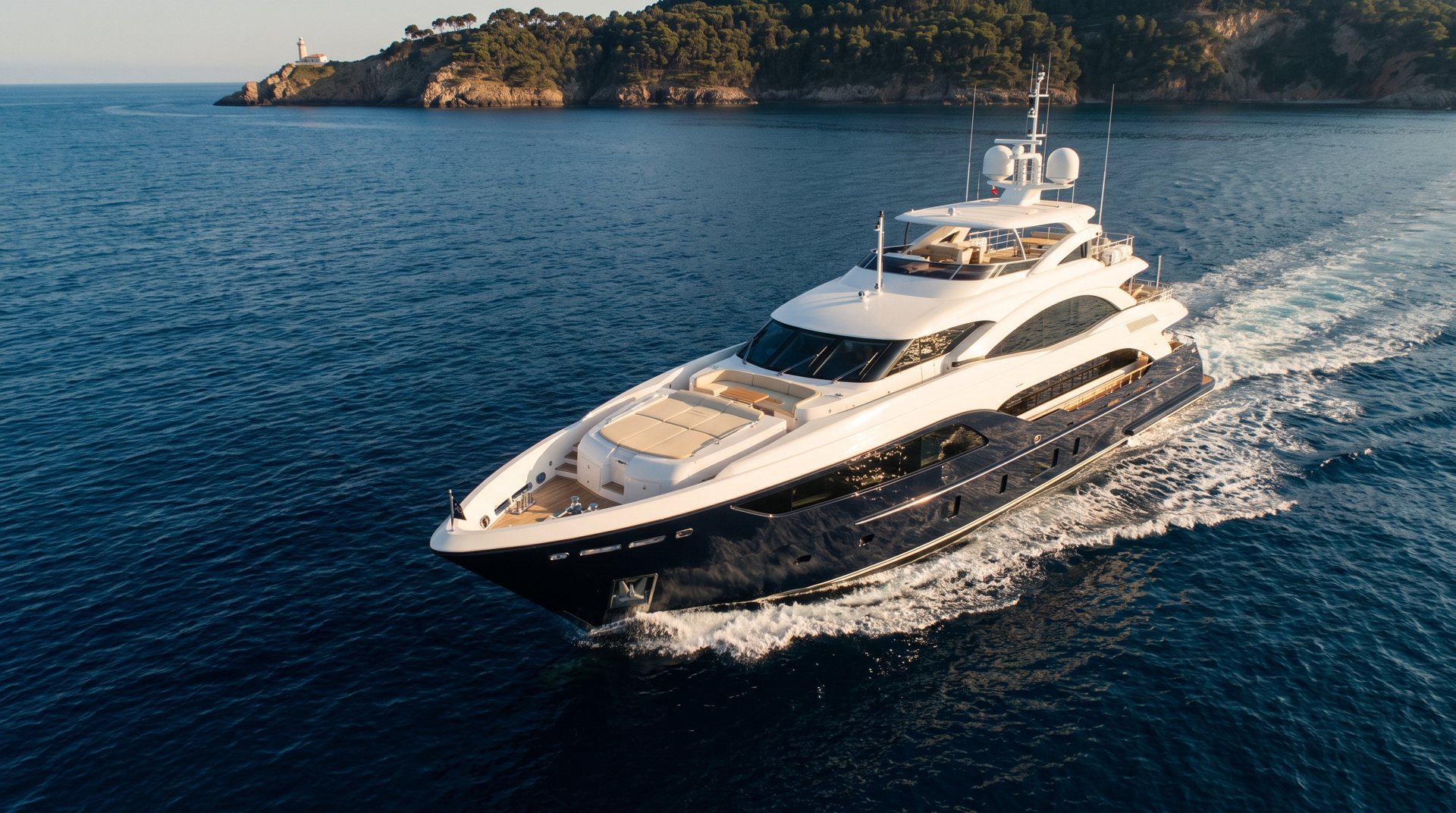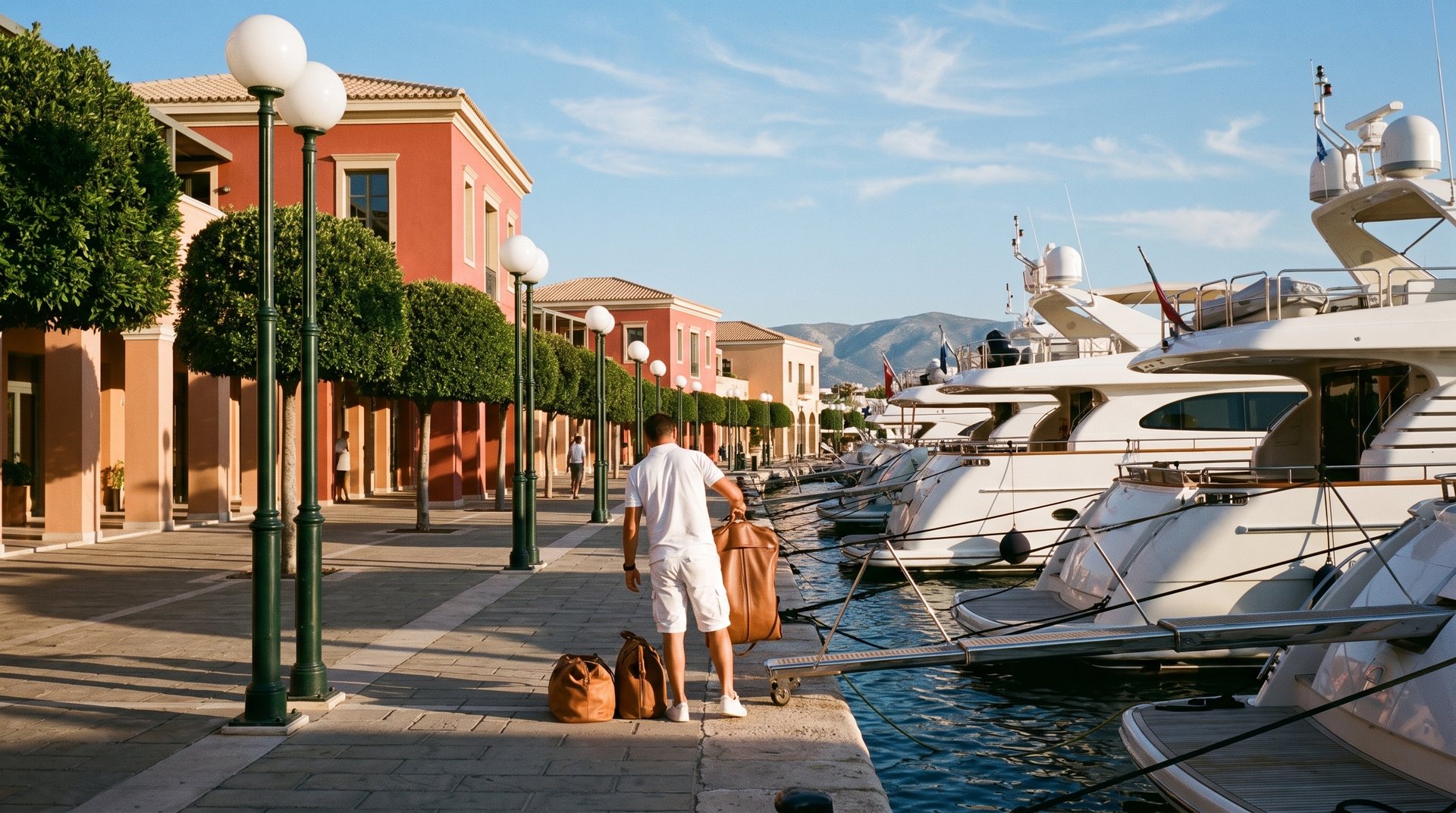
Alimos and Flisvos. Where Greek charters actually start.
Almost every yacht chartered in Greece leaves from one of a handful of marinas along the Athens Riviera. Which one you are on changes the transfer, the timing and how the day feels.
- 20+years in private travel
- Ownedchauffeur fleet in London and Manchester, a trusted global network beyond
- 24/7operations desk, one contact
- 3services on one itinerary: car, jet and yacht
In partnership with Harrods Aviation · Signature Aviation · SW Global
The essentials
The Athens Riviera marinas at a glance
- Where they areThe coast road south of AthensFlisvos is at Palaio Faliro, roughly 6 km from the city centre. Alimos is a few kilometres further south along the same road.
- Alimos MarinaAround 1,064 berths, yachts to about 40 metresThe largest marina in Greece and the main charter base in the eastern Mediterranean. Depth to about 6.5 metres.
- Flisvos MarinaAround 310 berths, yachts to about 110 metresMore than half the berths take yachts over 30 metres. Depth from about 4.5 to 16 metres. The Athens home of the large charter fleet.
- Nearest airportAthens Eleftherios Venizelos (ATH)Around 40 km, normally 35 to 55 minutes by road and longer at peak times on a summer Saturday.
Published marina figures, checked in September 2026. Berths are held by the yacht through her captain and agent. We arrange the flights and the cars, and we claim no relationship with either marina or the airport.
The marinas
Two marinas doing two different jobs
Flisvos and Alimos sit within a few kilometres of each other on the same stretch of coast and they are not interchangeable. Flisvos, at Palaio Faliro, is the superyacht marina: around 310 berths, more than half of them for yachts over 30 metres, depth ranging from about 4.5 to 16 metres and a maximum length of around 110 metres. It is landscaped, it has restaurants and shops along the quay, and it is where a large crewed motor yacht will usually be waiting for you.
Alimos is the volume marina and the real engine of Greek chartering. Around 1,064 berths and yachts to about 40 metres, which sounds modest until you realise that the great majority of the sailing yachts, catamarans and smaller motor yachts chartered in Greece start their week here. On a summer Saturday it is one of the busiest changeover operations in the Mediterranean, with hundreds of boats handing over on the same morning. That is not a criticism of the marina. It is simply a fact your arrival has to be planned around.
The captain may name a different address along the same coast: Zea Marina at Piraeus, the Athens Marina next to Flisvos, or the Vouliagmeni and Astir marinas further south. If your paperwork says one of those, tell us. They are separate gates and a driver cannot guess between them.
Getting there
Road transfer ranges to the marinas
| To or from | Quiet roads | Summer peaks and changeover days |
|---|---|---|
| Athens airport (ATH) to Flisvos | 35 to 50 minutes | 50 minutes to 1 hour 20 |
| Athens airport (ATH) to Alimos | 40 to 55 minutes | 55 minutes to 1 hour 30 |
| Central Athens and the Acropolis | 20 to 30 minutes | 35 minutes to 1 hour |
| Piraeus and Zea Marina | 15 to 25 minutes | 25 to 45 minutes |
| Between Flisvos and Alimos | 10 to 15 minutes | 15 to 30 minutes |
| Vouliagmeni, Astir and the southern Riviera | 25 to 35 minutes | 35 minutes to 1 hour |
Realistic ranges in normal conditions, not promises. The coast road and Vouliagmenis Avenue are the two routes south and both load heavily at rush hour. Our own chauffeurs and cars are in London and Manchester. In Greece, cars are arranged through operators we know.
Changeover day
Saturday is not a normal day
Greek charters overwhelmingly run Saturday to Saturday, and that single convention shapes the whole logistics problem. Embarkation is typically from the late afternoon, because the outgoing party leaves in the morning and the crew need the hours between to turn the yacht around. The airport is at its busiest on the same day for exactly the same reason, the coast road carries the traffic of both directions of that turnover, and every car and driver on the Riviera is working.
The useful consequence is that the gap between landing and boarding is not wasted time: it is the point of the day. A party that lands at eleven cannot board at eleven, so the choice is between sitting in an airport and doing something with the hours: lunch on the coast, a few hours at a hotel near the marina, or a run into Athens for the Acropolis Museum. All of them need a car held rather than released. On a private aircraft the timing is more flexible and the principle is the same, because the crew's readiness rather than the flight sets the boarding hour.
Vehicles and the quay
Where the car stops, and where the tender lands
Flisvos is the straightforward one. It is a controlled marina with internal roads and parking, so a car can normally reach the head of the quay, set down with crew present and then park properly. Alimos is a different experience, particularly on a Saturday: it is a very large marina with several gates and pontoon groups, the access roads are busy with provisioning vans and taxis, and parking near the right pontoon is not guaranteed. The pontoon or berth number is what saves you. With it, the driver goes to the right gate. Without it, the party walks, and Alimos is long.
Luggage is worth a thought on a sailing yacht or a catamaran. Soft bags stow and hard cases do not, and a crew asked to find space for six large suitcases on a 20 metre boat will do it without complaint and without any room left over. If the yacht is lying off rather than alongside, the tender landing is agreed for that stay and should be confirmed the night before. Greece drives on the right, the Riviera roads are good and the run into Athens is simple outside rush hour, so for a group splitting between the yacht and the city, holding a car for the day beats arranging separate journeys.
The calendar
The season, and the wind that runs it
The Greek season runs from late April to the end of October, with July and August the peak. The variable that genuinely affects your itinerary is the meltemi, the northerly wind that blows through the Aegean in high summer. It is strongest in July and August and it can build enough to change a route for a day or two, most often in the Cyclades. A good captain plans around it rather than fighting it, which sometimes means the yacht ends the week somewhere other than the plan said. If your return flight is tight, tell us early and we will keep the last day flexible.
June and September are the sweet spot: warm water, settled weather, lighter winds and marinas working normally rather than at their limit. From Athens the Saronic islands are within a couple of hours and the Cyclades a day's run, while the Ionian is reached from the other side of the country rather than from here. For the wider picture see Mykonos, Santorini and Corfu, and for how a charter is put together see how charter works and APA explained.
Embarkation day
What makes the day work
- Name the marina and the pontoon. Flisvos and Alimos are different places, and Alimos is very large
- Expect a late afternoon boarding on a Saturday, and plan the hours between the flight and the yacht rather than spending them at the airport
- Hold the car for the gap. Releasing it and finding another on a summer Saturday is the hard way to do this
- Ask the crew about luggage, especially on a sailing yacht or a catamaran. Soft bags, every time
- Give us everyone's flight times if the party arrives on several flights. Boarding together is easier than boarding in waves
- If the return flight is tight, say so at the planning stage. The meltemi can move where the week ends
Around the trip
Related pages
Request a proposal
Tell us the marina and the flights
Dates, how many of you, where everyone is flying from and which marina and pontoon the yacht is on. We will come back with the aircraft, the cars, and a plan for the hours between landing and boarding rather than a transfer that leaves you waiting at a gate.
Prefer to talk? +44 2030 048300 or WhatsApp, at any hour.
Questions people ask
About the Athens marinas
What is the difference between Alimos and Flisvos?
Flisvos, at Palaio Faliro, is the superyacht marina: around 310 berths, more than half for yachts over 30 metres, and a maximum length of around 110 metres. Alimos is the largest marina in Greece with around 1,064 berths for yachts to about 40 metres, and it is the main base for chartered sailing yachts and catamarans.
How long is the transfer from the airport?
Thirty five to fifty five minutes for the roughly 40 km, depending on which marina and the time of day. On a summer Saturday, when the whole charter fleet changes over, an hour to an hour and a half is realistic.
Why can we not board when we land?
Greek charters usually run Saturday to Saturday and boarding is typically late afternoon, because the outgoing party leaves in the morning and the crew turn the yacht around between. We plan the hours in between rather than leaving you with them.
Can the car drive to the yacht?
At Flisvos, normally yes: a set down at the head of the quay with crew present, then the car parks. At Alimos it depends on the gate and the pontoon, which is why we ask for the pontoon number. Without it the party walks, and Alimos is a very long marina.
What is the meltemi and does it affect us?
It is the northerly summer wind in the Aegean, strongest in July and August. It can change a route for a day or two, usually in the Cyclades. It rarely affects embarkation in Athens but it can affect where the week ends, so we keep the last day flexible when the return flight is tight.
Are these your own cars?
No. Our own fleet and our own chauffeurs are in London and Manchester. In Greece cars are arranged through operators we know, to the same brief, through the same contact at Odyssey.