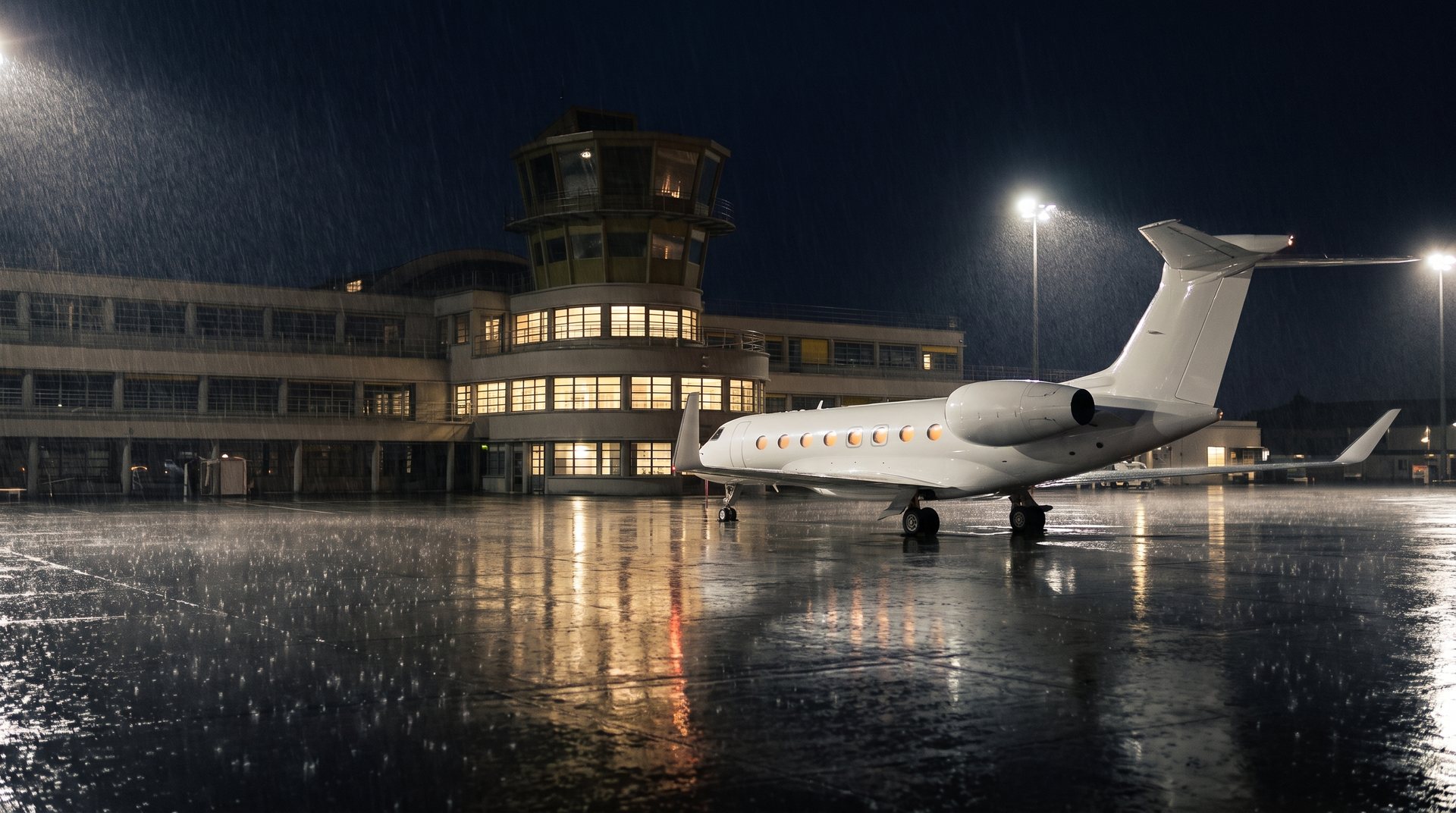
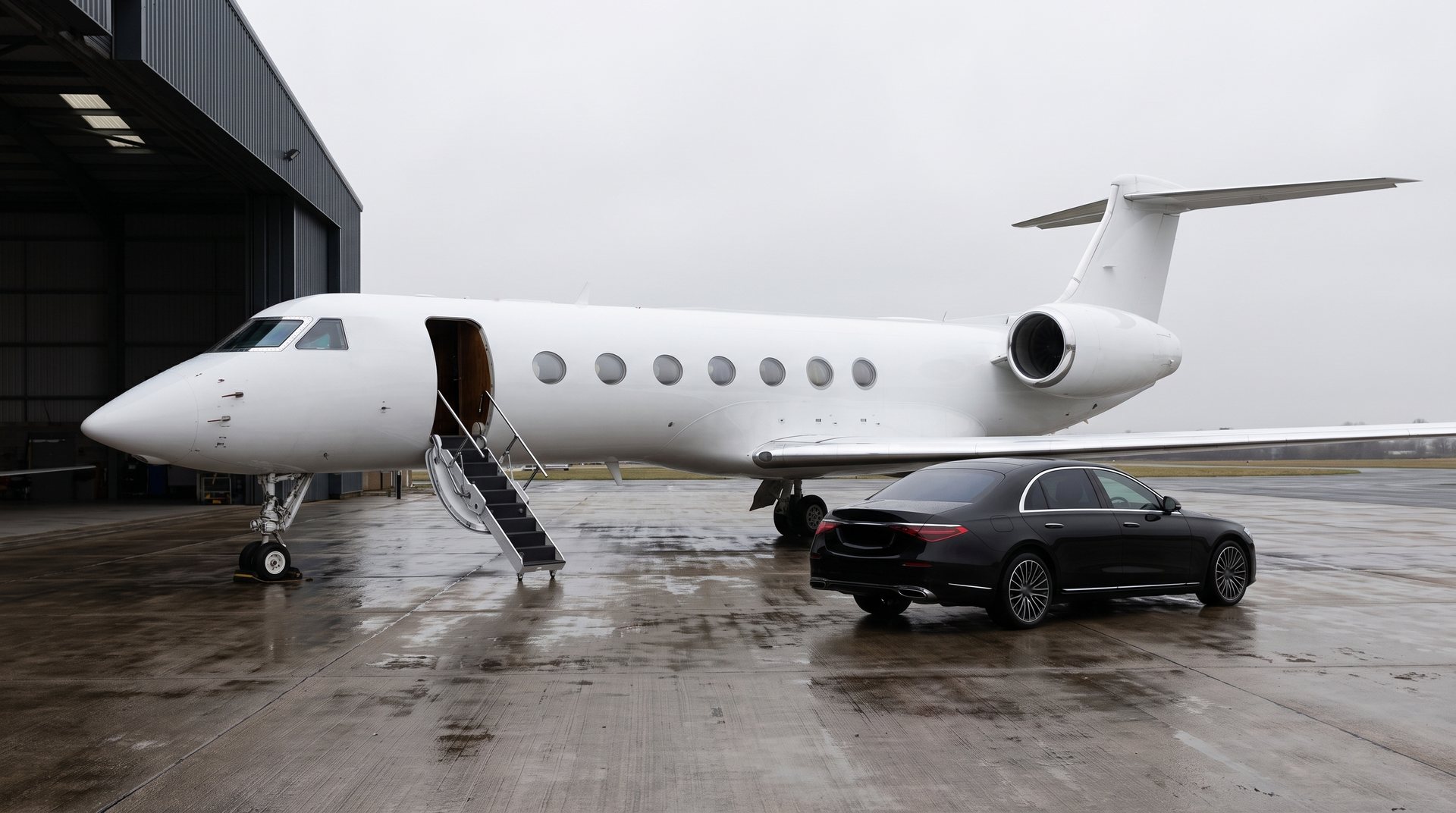
Bombardier Global 6000. The long-range aeroplane most trips actually need.
Six thousand nautical miles, three separate cabin zones and one of the widest cabins in business aviation. Plentiful in Europe, which is often the point.
PassengersTypically 12 to 13, up to 17Most charter cabins are laid out for twelve or thirteen in three zones, with the rear cabin made up for sleeping.
Range6,000 nm at Mach 0.85Bombardier's figure with eight passengers and reserves. Maximum operating speed is Mach 0.89, and high-speed cruise is about Mach 0.88.
CabinAbout 43 feet 3 inches longWidth 7 feet 11 inches at the widest point, height 6 feet 2 inches, in three zones with a full galley and a crew rest area.
Field performanceAbout 6,476 feet to take offAt sea level at maximum weight. It is a runway-hungry aeroplane at full fuel, which shapes which London airports it goes from.
Manufacturer figures for the type. Every quote names the actual aeroplane, its cabin layout and its operator, because individual aircraft differ a great deal on a type this long in service.
Why it matters
The aircraft that made long range ordinary
The Global family has been flying since the late 1990s and the 6000 is the version that settled into being the long-range workhorse of the charter market. There are a great many of them, they are well understood by operators and crews, and on most dates there is one within a short positioning flight of London. That last point decides more quotes than any specification on this page.
The cabin is the reason clients come back to it. Nearly eight feet across at the widest point, three genuinely separate zones, and a rear cabin that makes up into a bedroom on a night sector. Bombardier's interiors use a low cabin altitude and a quiet cabin as their selling points and passengers tend to agree on both. It is a fraction narrower and a fraction shorter than a G650, and for a great many trips nobody would notice which one they were sitting in.
Globals are arranged with licensed commercial operators. Where this aircraft earns its place is the space between a heavy jet that cannot quite do the sector and an ultra-long-range aircraft that is more aeroplane and more money than the trip needs. London to New York, the Gulf, west Africa, India and most of North America all sit comfortably inside it.
Reach from London
What it does non-stop
Destination
Roughly
Realistic non-stop?
New York
About 3,000 nm
Yes, both ways, in any season
Dubai
About 2,950 nm
Yes, easily
Mumbai
About 3,750 nm
Yes
Los Angeles
About 4,750 nm
Yes, with the day's wind and load checked carefully
Johannesburg
About 4,850 nm
Yes
Hong Kong
About 5,200 nm
Yes, and the sector the type is known for
Singapore
About 5,900 nm
On paper only. In practice expect a stop, or a G650
Great circle distances, rounded, for planning only. Published range assumes eight passengers and still air; a full cabin or a winter headwind takes several hundred miles off it.
Range on the map
How far it goes without stopping
The ring is the published range drawn as a true circle on the globe, which is why it bends on a flat map. Change the departure to see the reach from anywhere.
Published range85%, still-air planning
Bombardier Global 6000 from Farnborough Airport (FAB). The solid ring is the published range, 6,000 nautical miles; the dashed ring is 85% of it, 5,100 nautical miles, the still-air planning figure we use to leave a sensible reserve. Winds, payload and reserves reduce real range, so every trip is checked on the day.
Said honestly
The limits worth knowing
It needs runway. About 6,476 feet at maximum weight at sea level, so a full-fuel departure narrows the London choice and may mean Luton, Stansted or Gatwick rather than a smaller field
Age varies enormously. Some Global 6000s on charter are a decade and a half old with tired interiors and others are close to new, so ask what year the aeroplane is and what its cabin looks like. We do
Six thousand miles is not seven. Singapore, Sydney and the far side of Australia belong to the ultra-long-range aircraft, and we will say so rather than sell you a stop you did not expect
Seventeen seats is a certificated figure. Twelve or thirteen is what the cabin is genuinely built for, with sleeping arrangements for rather fewer
Connectivity is the one to check on older airframes: some are fitted with modern high-speed systems and some are not, and on a twelve hour sector that is the difference between a working flight and a lost day
For eight people going four hours it is far more aeroplane than the trip needs. A heavy jet or a super-midsize does that for much less
The alternatives
Aircraft quoted against it
Long-range enquiries usually produce two or three of these together, and availability on your date decides as often as capability does.
Gulfstream G550, a similar era with a little more range
Dassault Falcon 8X, three engines and far better at restricted airports
Bombardier Global 5000, the shorter-legged sister at a saving
Bombardier Global 6500, the newer re-engined development with more reach
Send the route, the date and the number of passengers, and say if anybody needs to sleep or to work online for the whole flight. On this type the individual aeroplane matters as much as the model, so we will tell you the year, the cabin and the connectivity of the one being offered before you decide.
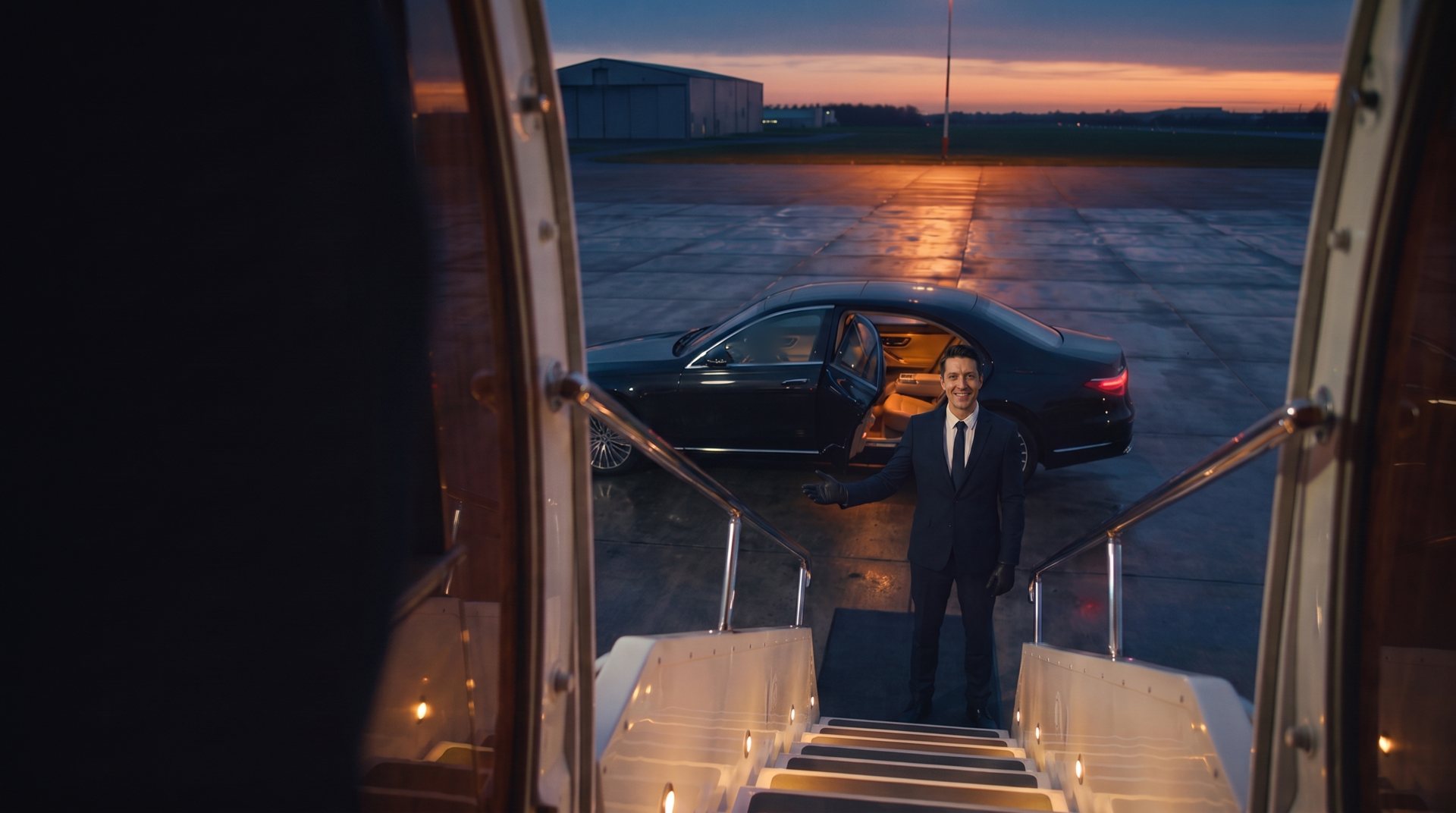
We arrange the charter with a licensed commercial operator and name the aircraft, its year, its cabin layout and its operator before you commit. Our own cars and chauffeurs cover London and Manchester, with a trusted global network everywhere else, so the car is at the steps at both ends.
How does it compare with a G650?
The G650 is faster, longer-legged and generally newer, and it is priced accordingly. The Global 6000 has a similar cabin width, three zones and enough range for the great majority of trips people actually make. On a London to New York or London to Dubai sector the difference in the cabin is small and the difference in the quote is not.
What is the difference between the Global 5000, 6000 and 6500?
Range, essentially. The 5000 has a shorter cabin and about 5,200 nautical miles, the 6000 about 6,000, and the 6500 is the newer re-engined version with more reach and a refreshed cabin. All three fly from the same airports and feel broadly alike inside.
Can we sleep on board?
The rear zone makes up into a bedroom and the divans convert, so several of a party of twelve can lie flat on a night sector. Not all twelve can, so tell us how many genuinely need to sleep rather than how many are flying.
Can it use Farnborough or Biggin Hill?
Farnborough handles large business jets regularly, subject to the aircraft, the load and the day. At full fuel this type is runway limited, so on a long sector the aeroplane often goes from a larger airport and the car takes you there. We check it for your specific trip rather than assume.
What does it cost?
It depends on the route, the date and which aeroplane is available, and the spread between an older airframe and a nearly new one is wide on this type. See what private jet charter costs, and send us the trip for a real figure.