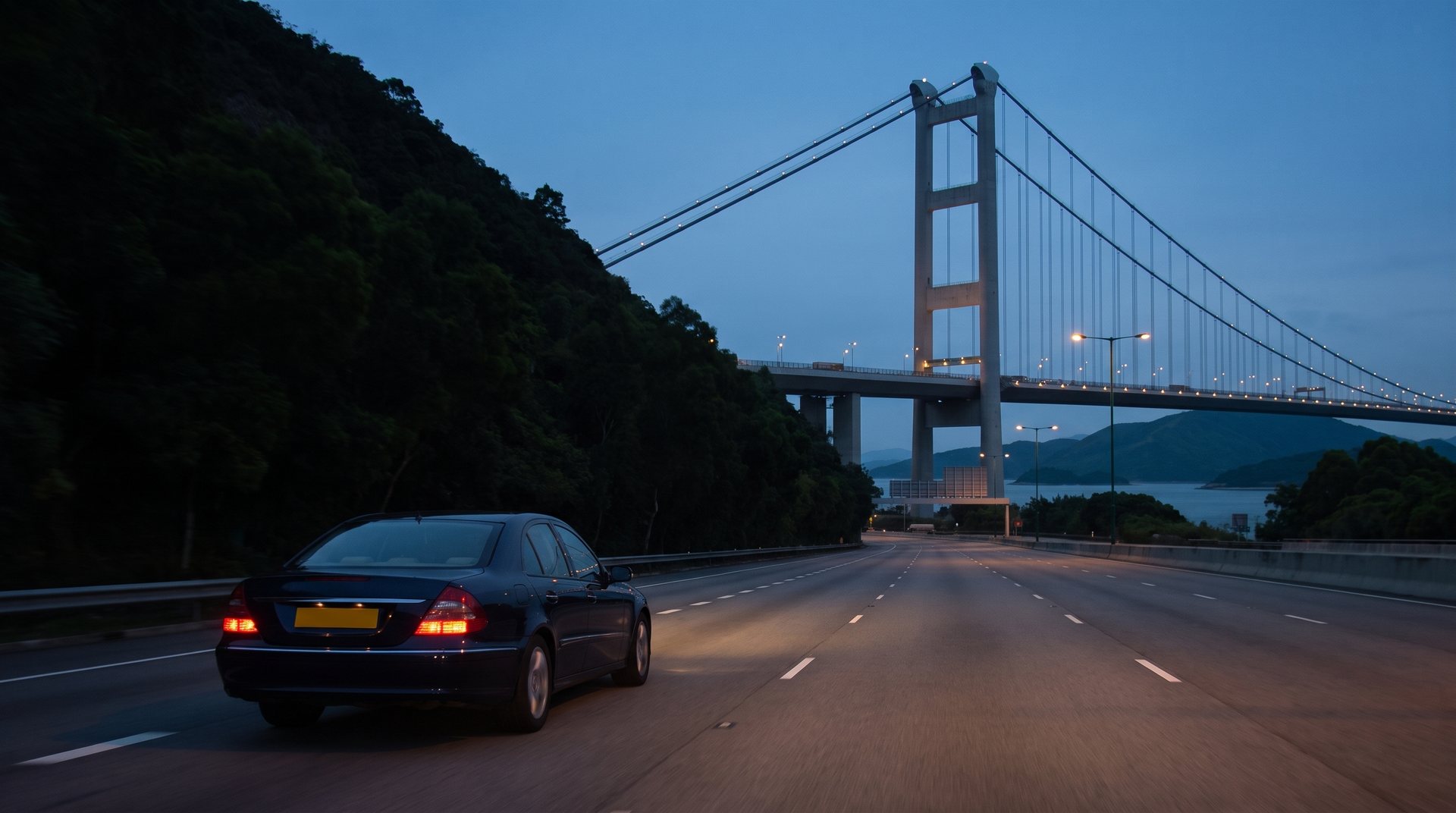
Hong Kong. An hour of bridges between the apron and the office.
Chek Lap Kok sits on its own island off Lantau, with a dedicated business aviation terminal beside the south runway. The arrival is smooth. The thing to sort out months earlier is the parking.
The airport
Chek Lap Kok at a glance
- CodesHKG / VHHHHong Kong International Airport, on reclaimed land off the north coast of Lantau, about thirty five kilometres from Central.
- Private arrivalsA dedicated business aviation terminalThe Hong Kong Business Aviation Centre, beside the south runway, with its own customs, immigration and lounges. It completed a five year expansion in 2026 that roughly doubled its handling capacity.
- Slots and parkingArranged in advance, and not automaticOperators need a confirmed runway slot, a confirmed handling arrangement and a confirmed parking stand through the airport's business aviation parking system. Applications are capped at fourteen days at a time.
- Getting to townRoad, or helicopterBy road it is the North Lantau Highway and the Tsing Ma Bridge. Helicopter transfers into the Central heliports are also possible and take a fraction of the time.
Parking is the constraint that catches people out. Hong Kong is not a field where an aircraft can simply sit for a fortnight because the trip has been extended. If your dates may move, say so at the outset so the operator applies accordingly.
Journey times
From the airport by road
| To | Quiet roads | Peak |
|---|---|---|
| Central and Admiralty | 30 to 45 minutes | 45 to 65 minutes |
| Wan Chai and Causeway Bay | 35 to 50 minutes | 50 to 75 minutes |
| Tsim Sha Tsui, Kowloon | 30 to 45 minutes | 45 to 65 minutes |
| The Peak | 40 to 55 minutes | 55 to 80 minutes |
| Repulse Bay and the south side | 45 to 60 minutes | 60 to 85 minutes |
| Kowloon Tong and Kowloon City | 35 to 50 minutes | 50 to 70 minutes |
| Discovery Bay and Tung Chung | 10 to 25 minutes | 15 to 35 minutes |
| Central, by helicopter | About 10 minutes in the air | Weather dependent, and arranged separately |
Realistic ranges. The harbour crossings and the approaches to them are where Hong Kong traffic actually queues, so an address on Hong Kong Island and an address in Kowloon are genuinely different journeys.
Why clients come
A working city with a very short calendar
Most private travel into Hong Kong is business travel, and it clusters. The art fair in March fills the hotels and the aprons together, the spring and autumn auction weeks do the same on a smaller scale, the rugby weekend is a fixed point in the calendar, and Chinese New Year moves everything in the region at once. In each of those weeks the aircraft parking, the cars and the rooms all tighten in the same fortnight. We describe transport to these events and claim no connection to any of them. See Art Basel Hong Kong and all events.
The other pattern is the stop. Hong Kong is a natural pause on a long itinerary between Europe and Australia or between Europe and Japan, and for a party changing aircraft or crew it is a comfortable place to spend eighteen hours. If that is your trip, tell us, because a stop with a hotel, cars at both ends and a departure the next morning is planned differently from an arrival.
Our own cars and our own chauffeurs are in London and Manchester. In Hong Kong, cars are arranged through operators we know. Hong Kong drives on the left, the fleets are good and the drivers are professional. What matters more here than the vehicle is the routing: a chauffeur who knows which crossing to take at five in the afternoon is worth more than any badge on the bonnet. See corporate chauffeur service and executive roadshows.
Two practical matters
Typhoons, and the water route out
Between roughly May and November, Hong Kong can be affected by tropical cyclones. When a higher typhoon signal is raised, the city stops in a very orderly way: offices close, most road transport ceases and flights are suspended until it is lowered. It is not dangerous if you are indoors and it is not negotiable, so the only sensible response is to watch the forecast against the itinerary and keep a day of slack in a trip that cannot move. If a signal is raised while you are with us, we will tell you what it means for your movements rather than leaving you to guess.
The airport also has a ferry pier of its own, used by passengers travelling on to Macau and the mainland ports without formally entering Hong Kong, and there is now a road bridge west to Macau and Zhuhai. Both are worth knowing about if the destination is really on the other side of the estuary rather than in the city. Whether either suits you depends on your documents and your itinerary, which is a matter for your own advisers rather than for us.
For everything within Hong Kong itself, our approach is the usual one: one contact holding the flight, the handler, the cars and the schedule, so that when something moves, one person moves all of it. See our operations centre and travel management.
Onward
Around an Asian itinerary
Request a quote
Tell us the movement
Date, tail number or operator, passengers, luggage and where you are going, on which side of the harbour. If it is a week of meetings, send us the schedule and we will build the cars around the crossings rather than around the airport. We reply with a clear price. Nothing is booked or charged online.
Prefer to talk? +44 2030 048300 or WhatsApp, at any hour.
Questions people ask
About Hong Kong arrivals
Is there a separate terminal for private flights?
Yes. Business aviation is handled at the dedicated business aviation terminal beside the south runway, with its own customs, immigration and lounges, away from the commercial building.
Why does parking need arranging so far ahead?
Stands for business aircraft at Hong Kong are allocated through the airport's own system, alongside a runway slot and a handling arrangement, and applications cover a limited number of days at a time. It is a managed airport, not an open field.
How long is the drive to Central?
Thirty to forty five minutes outside the peaks, and up to an hour or more in them. Kowloon addresses are usually a little quicker because they avoid a harbour crossing.
Can we take a helicopter into town?
Yes, subject to weather and availability, and it reduces the journey to roughly ten minutes in the air. It is arranged separately from the car. See helicopter charter.
Are these your own cars?
No. Our own fleet and our own chauffeurs are in London and Manchester. In Hong Kong cars are arranged through operators we know.
What happens if a typhoon signal is raised?
The city closes in stages and transport stops until the signal is lowered. We will tell you what it means for your movements as it happens. Between May and November, keep some slack in a trip that cannot move.