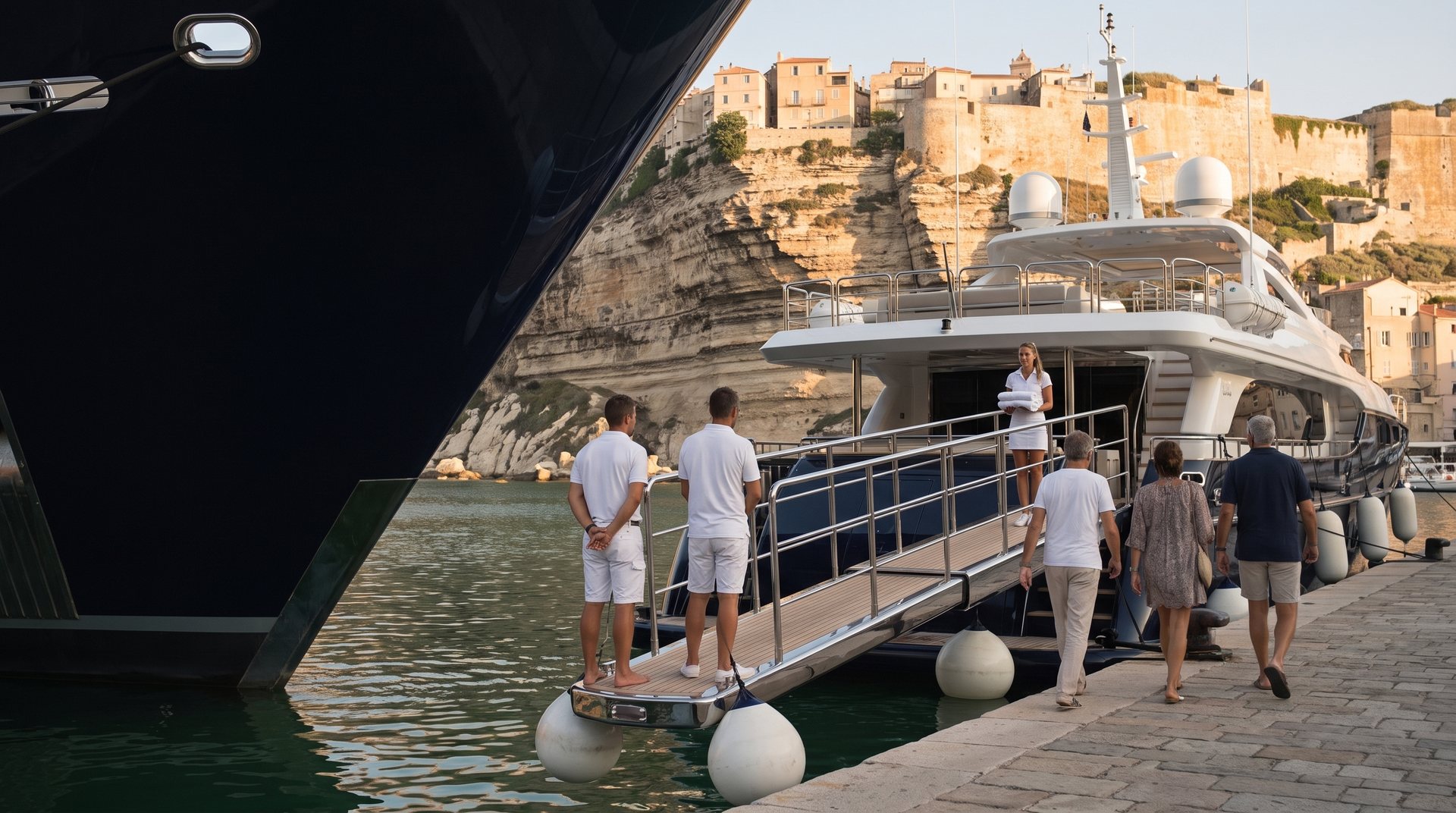
The yacht is the easy part. The crew are the holiday.
Every charter we arrange is crewed: a captain, a chef, an engineer and a service team who live on board and run the yacht for you. Which crew you get matters more than which yacht, and it is the part most people never think to ask about.
What crewed means
The whole yacht and her crew, so the week runs itself
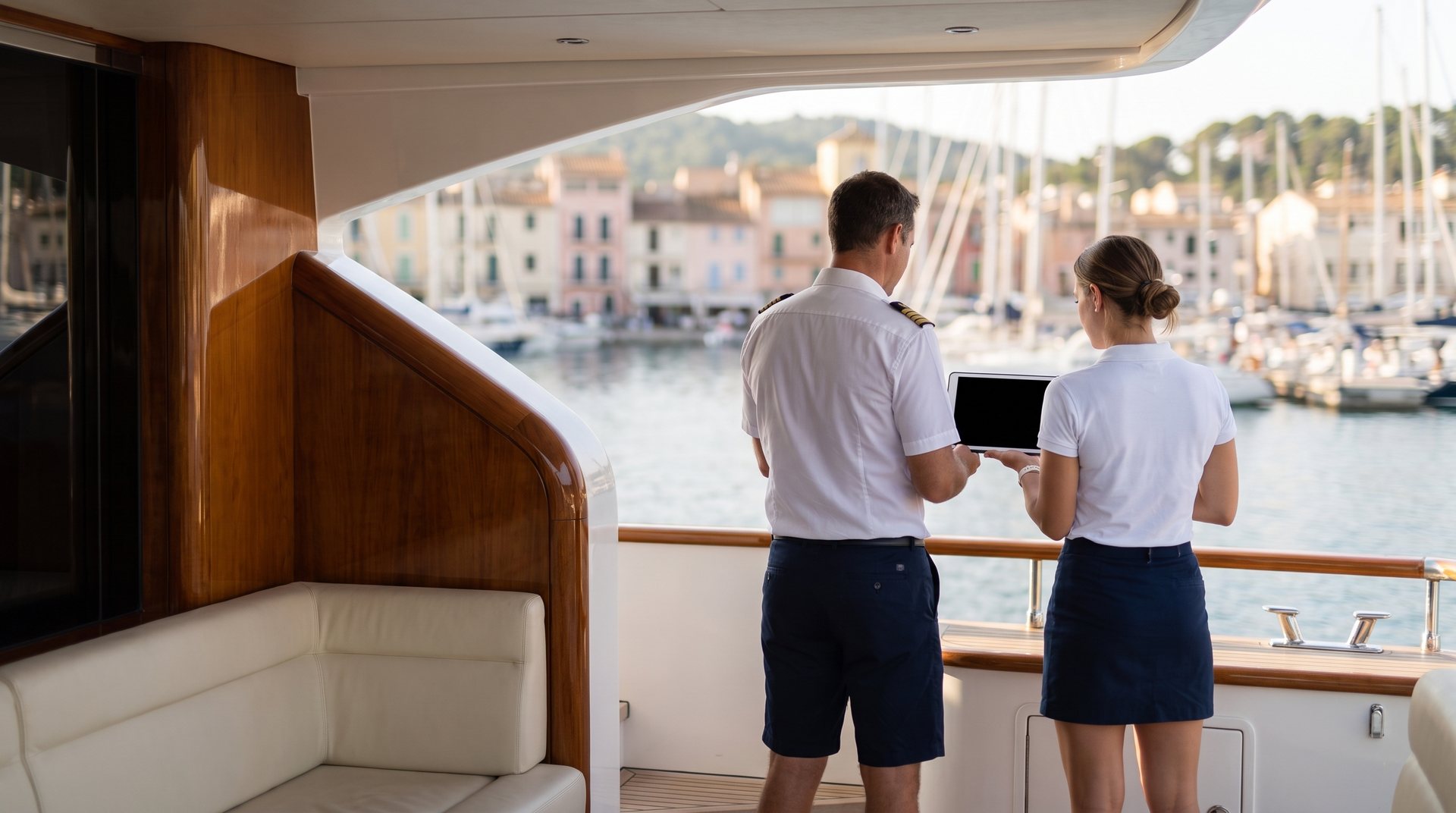
A crewed charter is the whole yacht with her professional crew for the dates you take her. You do not navigate, anchor, cook or clear up, and you do not hire the crew: they work for the yacht and they come with her. A bareboat charter, where a qualified guest takes a small yacht without crew, is a different activity altogether and not what these pages describe.
The practical effect is that the week runs itself. The tender is in the water when you want it, the table is laid where the wind is not, lunch happens at the hour you eventually decide on, and somebody has already noticed that the youngest cannot swim as well as she claims. Good crews do all of that without appearing to be anywhere near you.
It also means the yacht is a workplace with rules. The captain is responsible for the safety of everybody on board and has the final word on where the yacht goes, when she moves and whether the tender runs in a swell. In practice you will rarely notice this, and on the one day a year that you do, you will be glad of it.
Who is on board
The crew, roughly by size
| Yacht | Typical crew | Who they usually are |
|---|---|---|
| 25 to 30 metres | 4 to 6 | Captain, mate or deckhand, chef and one or two stewardesses. Everybody does a little of everything. |
| 30 to 40 metres | 6 to 9 | Add an engineer, a bosun and a second stewardess. This is where a dedicated chef and a proper service rhythm appear. |
| 40 to 50 metres | 9 to 13 | A chief officer, a chief engineer, a chief stewardess with a team, a chef and sometimes a sous chef, and deck crew who run the toys. |
| 50 to 70 metres | 13 to 20 | Departments proper: deck, engineering, interior and galley, usually with a purser handling the paperwork and the accounts. |
| Above 70 metres | 20 and upwards | Approaching one crew member per guest, plus specialists: a masseuse, a dive instructor, a second chef, and a helicopter crew where the yacht carries one. |
Guest numbers are capped at twelve on a commercially registered charter yacht, whatever her size, so a larger yacht means more crew and more space rather than more people in your party.
Standards
What professional crew hold
- Basic safety training under the international STCW convention, which every crew member on a commercially operated yacht is required to hold, whatever their department
- A seafarer medical certificate, usually an ENG1 or a flag state equivalent, confirming fitness for sea service
- Officer and engineering certificates appropriate to the yacht's tonnage for the captain, the officers and the engineers
- Employment under the Maritime Labour Convention, which sets working hours, rest, accommodation and pay conditions on commercially registered yachts
- Specialist tickets where the yacht carries the equipment: powerboat and tender handling, dive supervision, and helicopter deck qualifications
- Safety drills and a guest safety briefing on the day you board, which is short, sensible and worth listening to
How we choose
Reading the crew, not just the brochure
Every yacht on a shortlist looks lovely in photographs taken on a calm morning by a professional. What separates a good week from a disappointing one is almost always the crew, so those are the questions we ask: how long the captain has been on this yacht, whether the chef is the one who cooked the sample menus, how stable the interior team has been this season, and what previous charter parties said afterwards.
We also ask the unglamorous questions. Whether the crew are used to small children or would rather not be. Whether the yacht does well with a large party of friends or is happier with one family. Whether the chef's strength is the long lunch or the formal dinner. If a yacht is beautiful but the wrong fit for you, we would rather say so at the shortlist stage than at the end of your week.
One thing we will not do is pretend the crew are ours. They are the yacht's, employed by her owning company or manager. What we do is ask the questions on your behalf, read the answers properly and tell you what we think.
Before you board
The preference sheet earns its keep
- 01
It goes out early
Usually several weeks ahead. The chef provisions against it before you arrive, and in remote cruising grounds there is no second chance to buy what was not on the list.
- 02
Be specific about food
Allergies and intolerances first, and be exact. Then the things you genuinely like, the things you will not eat, how you feel about lunch, and the wines and spirits you drink rather than the ones you think you should.
- 03
Say how you live
Early risers or late, formal dinners or bare feet, cabins and bed configurations, children's routines and whether you would like the crew visible or invisible. None of this is fussy. It is the brief.
- 04
Extras need notice
A nanny, a dive instructor, a yoga teacher, a birthday cake or a particular vintage all need lead time. Ask for them when you complete the sheet, not on the second evening.
The money side
How crew are paid for
- Their wagesIn the charter feeThe crew's salaries, their food and the yacht's insurance are paid by the owner out of the charter fee. You are not employing anybody.
- Your running costsThrough the APAFuel, food and drink for guests, berths and shore expenses are drawn from the advance provisioning allowance, which the captain holds and accounts for. See what a charter costs and APA explained.
- GratuityCommonly 5 to 15 per centDiscretionary, given to the captain at the end to share among the crew. Nobody will raise it with you, and we will tell you what is customary for the yacht and the region if you ask.
- Crew overtimeNot a line on an invoiceCrew hours are governed by the convention the yacht works to. A week of very late nights is agreed with the captain in advance rather than sprung on the crew, which is the difference between a willing team and a tired one.
The same crew question
Across the fleet types

Motor yachts
The majority of charters
Departmental crews, formal service where you want it, and the widest choice in the Mediterranean and the Caribbean.

Sailing yachts
Smaller crews, more hands on
Crews who sail properly and will teach you if you want. Guests get involved as much or as little as they like.
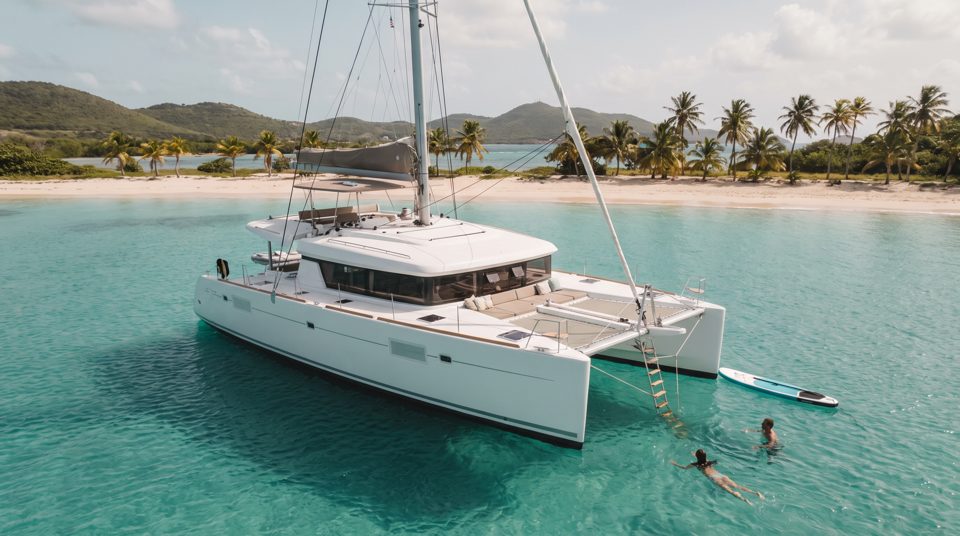
Catamarans
Four to six crew
Space and shallow draught with a small, close crew. Popular with families in the Caribbean and the Balearics.
Where this connects
Related pages
Where they are
Request a proposal
Tell us about your party
Dates, where you would like to be, how many of you and what sort of week you want. Tell us about the children, the food and whether you like crew around you or not. We come back with yachts whose crews suit you, and the full cost of each. Nothing is booked or charged online.
Prefer to talk? +44 2030 048300 or WhatsApp, at any hour.
Questions people ask
About crew
Do we have to tip, and how much?
It is discretionary. Where the crew have looked after you well, 5 to 15 per cent of the charter fee is customary, handed to the captain at the end to share. Nobody on board will ever mention it.
Can we meet the crew before we book?
Rarely in person, because the yacht is usually working, but a call with the captain before a longer charter is often possible and we will ask. You will always see the crew list, the chef's sample menus and what previous charterers said.
How much will the crew be around us?
Exactly as much as you want. Say so on the preference sheet, in plain words. Good crews are practised at being invisible and equally practised at joining in.
Can we bring our own nanny or chef?
A nanny, usually yes, with a cabin agreed in advance. Your own chef is harder, because the galley belongs to the yacht's chef and two cooks in one galley rarely ends well. Ask us early and we will find out what the yacht will accept.
Are the crew employed by you?
No. They are the yacht's crew, employed through her owning company or manager. We arrange the charter and ask the questions about them on your behalf.
What happens if we simply do not get on with the crew?
It is rare, and it usually means the match was wrong rather than the crew were bad. Tell us during the charter, not afterwards. We would rather deal with it on the Tuesday than read about it on the Sunday.
One contact, wherever you are